
Most commercial decorating starts with a question about colour. Heritage decorating starts with a different one: what is this wall actually made of, and what does it need to stay healthy for the next hundred years?
At Earlestown Town Hall, a Grade II listed civic building in Newton-le-Willows, that question shaped every decision we made. Over two phases, a January 2025 strip-out and a five-month redecoration from May to September 2026, a DDS team of 12 took the building from bare walls back to a finished interior ready to reopen to the town.
This is how we approached it, and why heritage work needs a different kind of decorating contractor.
Why heritage decorating is different
A modern building is designed around modern paint. A Victorian building isn’t. Walls finished in lime plaster were built to manage moisture by letting it pass through them. Cover lime in the wrong coating and that moisture has nowhere to go. Over time it shows up as flaking paint, blown plaster and damp patches that no amount of repainting will fix.
Listed buildings bring a second layer of responsibility. Original features, from plasterwork to joinery, are part of what makes the building significant. Damage them through careless stripping or aggressive sanding and you can’t simply replace them.
That’s why we don’t treat a heritage building as one job with one paint system. We treat it as a series of surfaces, each specified on its own terms.
The building
Earlestown Town Hall was designed by local architect Thomas Beesley and built in 1892–93. It served as the headquarters of Newton-le-Willows Urban District Council and was Grade II listed in 2008. Its double-height first-floor hall, with a stage and gallery, hosted The Beatles in 1962.
Today it sits at the centre of the £28 million Earlestown regeneration programme, led by St Helens Borough Council and the English Cities Fund. When it reopens, it will be a performance and events venue, a co-working space, a set of meeting rooms and a café. In other words, a building people will use every day, and judge up close.
Phase 1: Getting back to the original walls
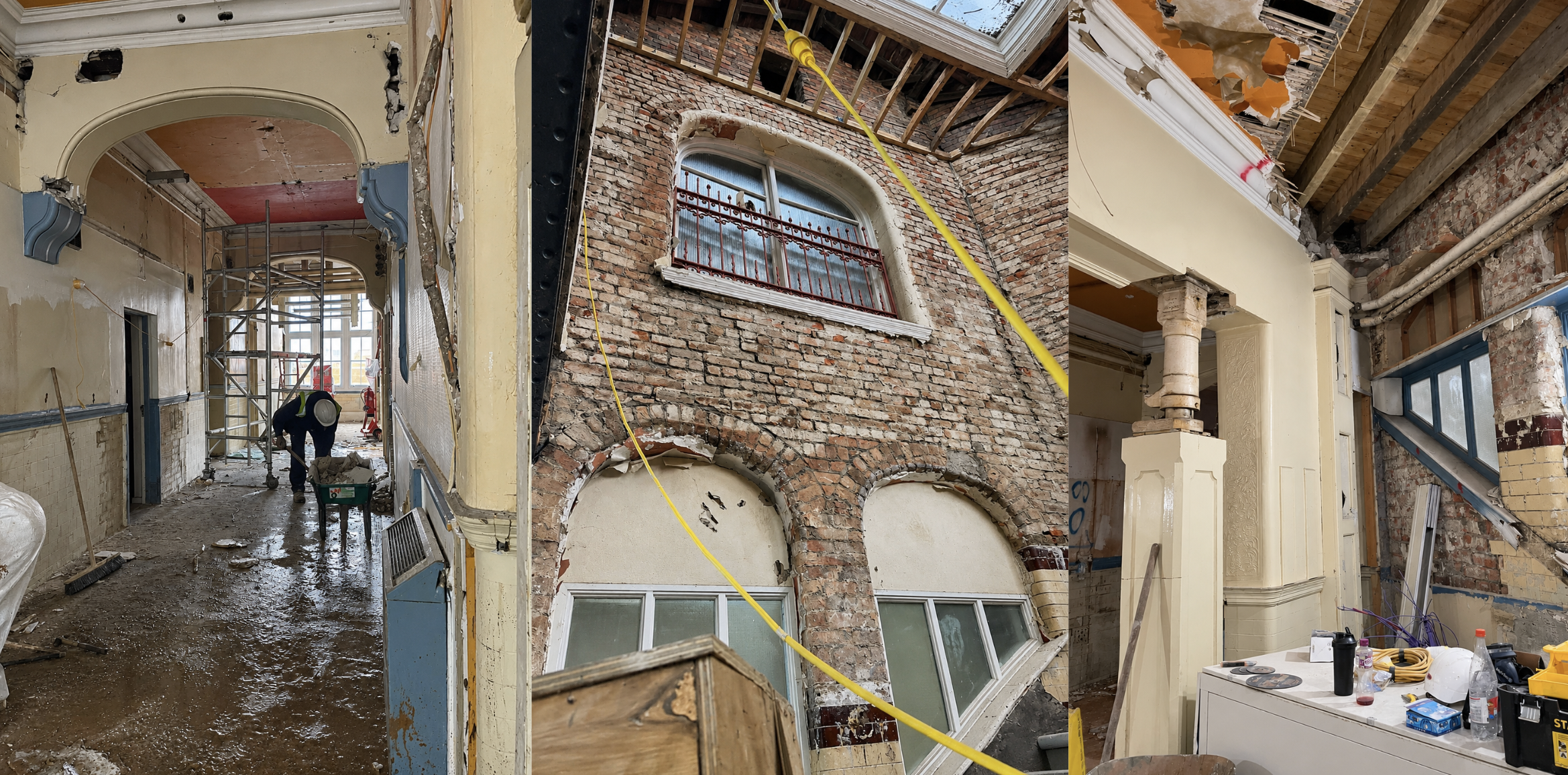
We were first brought in during January 2025. Over the decades, the walls had been covered in woodchip and wallpaper. All of it needed to come off before the enabling works could start.
Stripping old wall finishes from a heritage building isn’t demolition. Underneath sat original lime plaster that would later need to be decorated, so the aim was to remove what had been added without damaging what was there first. Getting this stage right meant the walls we came back to were ones we could work with, not ones that needed rebuilding.
Phase 2: The right system for every surface
We returned in May 2026 for the full redecoration. By then, the building had a mix of original lime plaster and new gypsum plaster from the enabling works. To the eye, a painted wall is a painted wall. To the building, they’re completely different materials.
Original lime plaster: letting the walls breathe
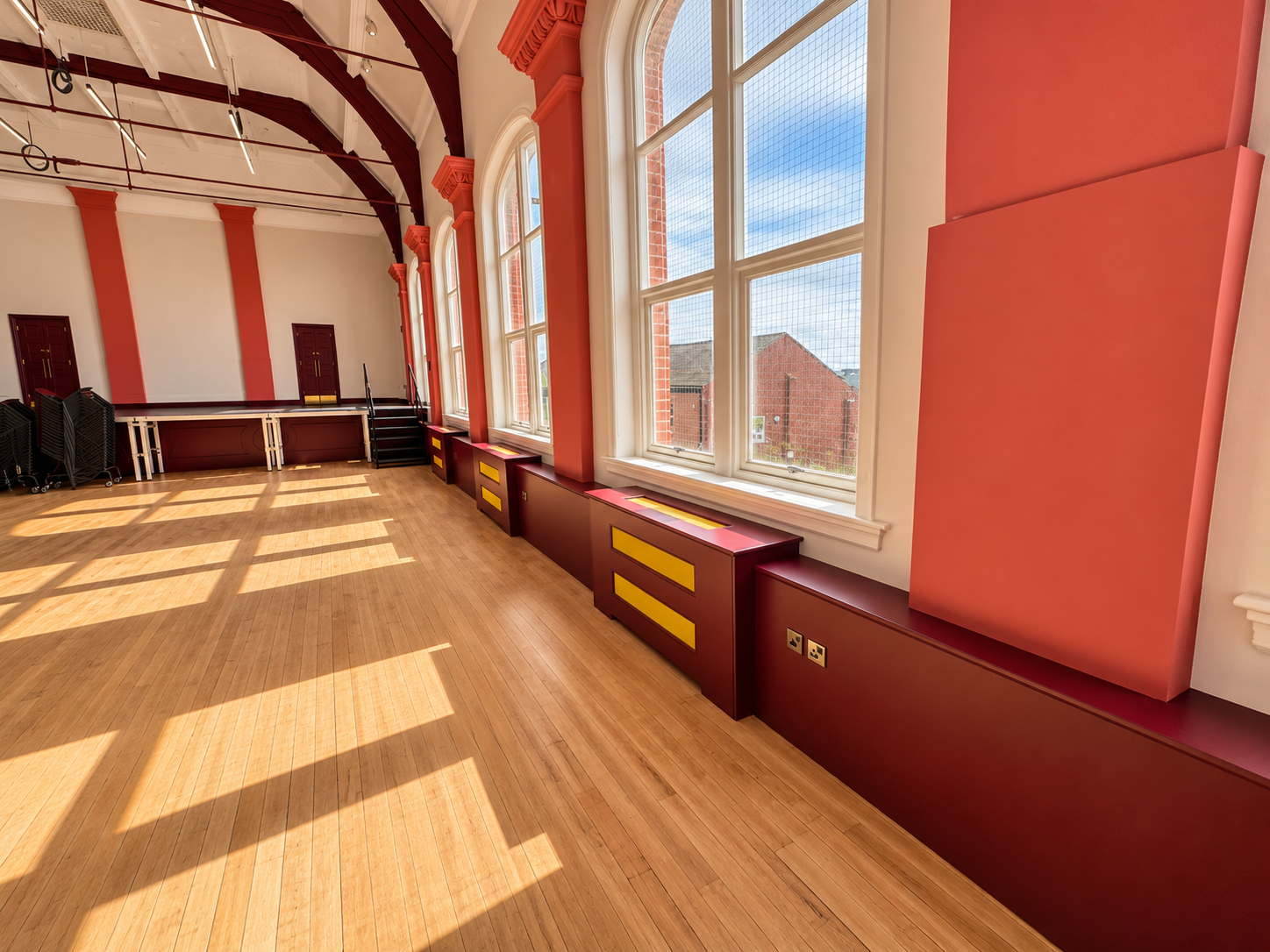
For the lime plaster walls we specified Earthborn Claypaint, a clay-based paint rated Class 1 for vapour permeability, the highest category. It’s designed for lime and other heritage substrates, and it lets moisture move through the wall the way the original builders intended.
A standard vinyl emulsion would have looked fine on handover day. The problems would have come later. Choosing a breathable finish now protects the plaster for the long term, and that’s the kind of decision a heritage building depends on its decorator to get right.
New plaster: sealed and finished properly
New gypsum plaster needs a different approach. We sealed it with a thinned mist coat so the topcoat would bond properly, then finished it in Dulux Trade Vinyl Matt for a durable, even surface suited to a busy public building.
Joinery: prepared, primed and finished
Every piece of woodwork was prepared, primed and undercoated, then finished in a water-based quick-dry satin. Water-based systems are low odour and don’t yellow over time, which matters both for how the joinery looks in five years and for the other trades working around us on site.
The main hall ceiling: sprayed at height
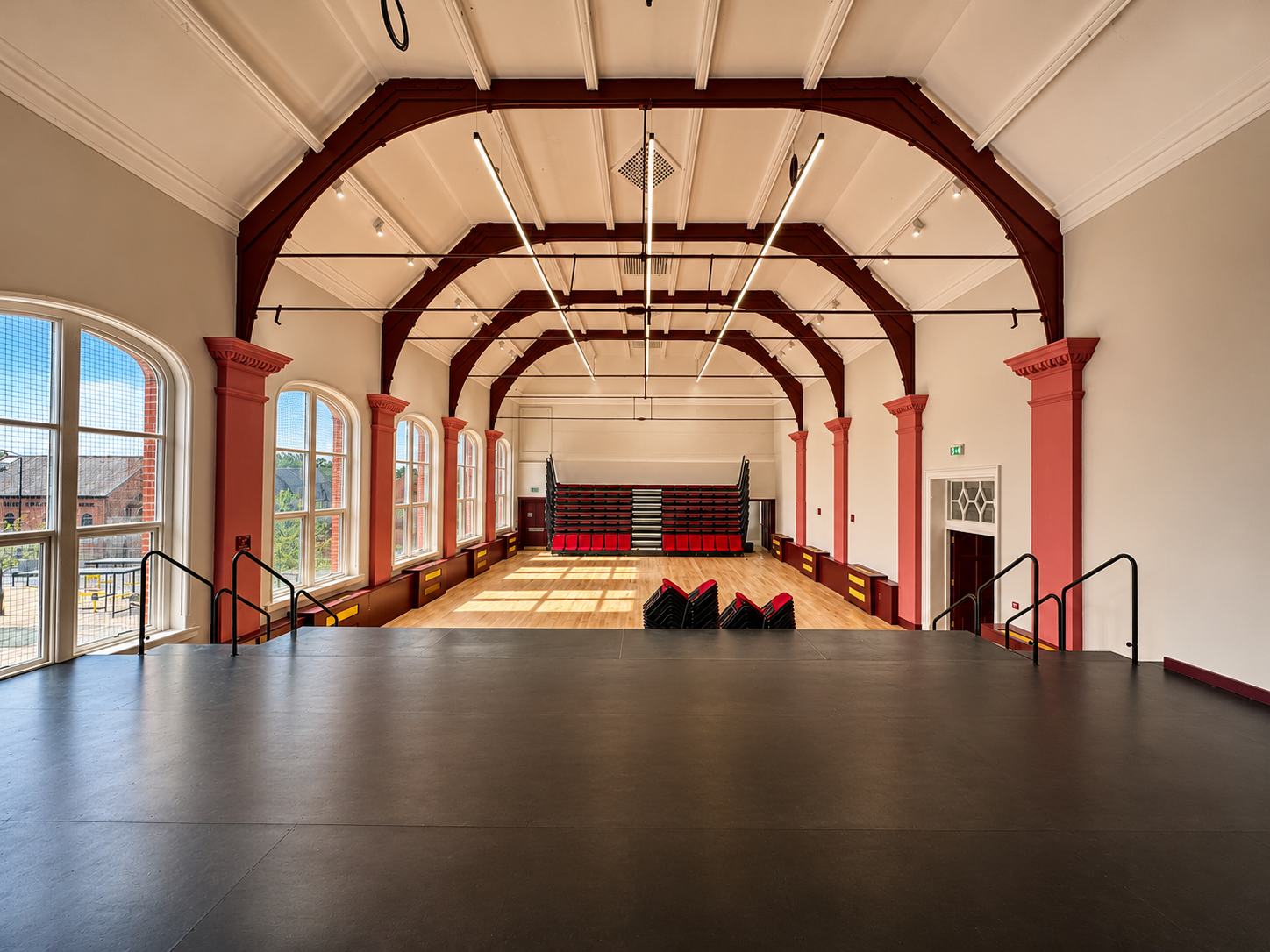
The ceiling of the double-height main hall was sprayed using water-based coatings. Spraying gave us uniform coverage across a large area at height, without the lap marks and variation that brushwork can leave on a ceiling that size, and in a fraction of the time.
Bringing the staircase handrail back
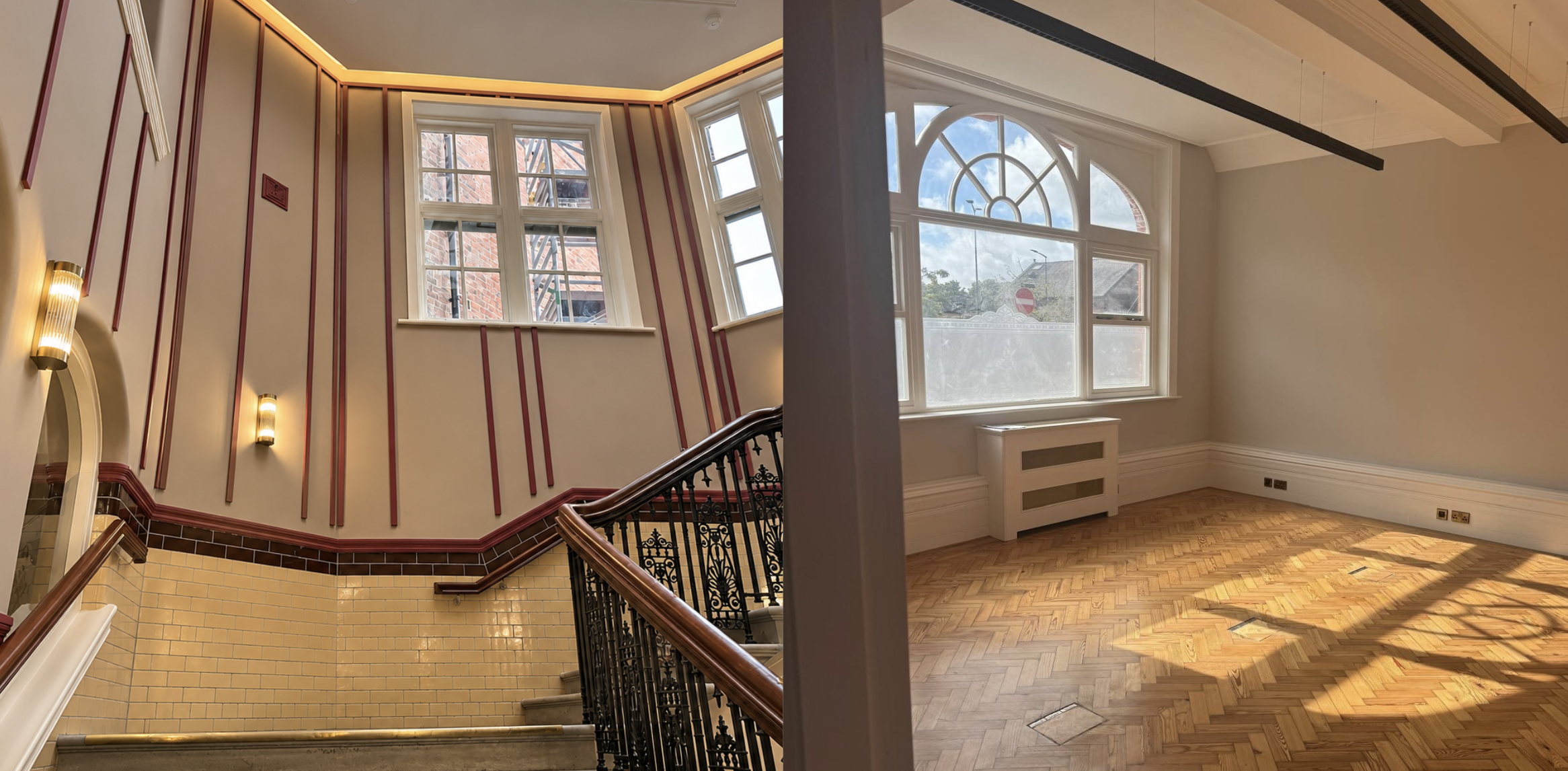
The main staircase handrail had been buried under years of old varnish. We stripped it back to bare timber, taking care not to damage the original wood, then refinished it with the Sikkens Cetol system: Cetol HLS plus as a penetrating base coat, followed by Cetol Filter 7 plus as a translucent satin finish.
The result is a handrail that looks the way it was meant to, with the grain of the timber visible again. On a listed building, restoring an original feature like this is worth more than any amount of new paint.
Preparation: the part you don’t see
On a building this age, the finish is only ever as good as what’s underneath it. The walls and woodwork needed extensive filling and making good before a single topcoat went on. We used Gyproc EasiFill 60 throughout and took every surface back to a pristine base.
Every bit of sanding on the project was done with dust-extracted sanders, from start to finish. That protected the historic fabric, kept the building clean for the trades working alongside us, and kept our team safe. It takes longer than doing it the quick way. It’s also the only way we’ll do it.
Working to the programme on a live site
The Town Hall was a live construction site, with multiple trades working towards a fixed handover. Decorating is usually one of the last trades in, which means it’s often where pressure on a programme lands.
We worked closely with the client throughout and planned our work around the trades on site. When the schedule needed it, our team worked late and into the evenings to support the client and keep the project moving. Full health and safety procedures and PPE were in place across the site at all times.
Training the next generation of heritage decorators
Our apprentices were part of the team at Earlestown, working alongside experienced decorators throughout. A listed building is one of the best places a young decorator can learn. They saw first-hand why lime plaster needs a breathable finish, how to prepare historic timber without damaging it, and what it takes to deliver quality work to a fixed programme.
Skills like these are getting harder to find across the trade. Passing them on is part of how we make sure buildings like Earlestown Town Hall are looked after properly for years to come.
What to look for in a heritage decorating contractor
If you’re responsible for a listed or historic building, the contractor you choose will make decisions that affect its fabric for decades. Before appointing anyone, it’s worth asking:
Will they specify by surface? A heritage contractor should be able to explain why lime plaster, new plaster and original timber each need a different system.
Do they understand breathability? If a contractor proposes standard emulsion on lime plaster, that’s a warning sign.
How will they strip and prepare? Ask how they’ll remove old finishes, and whether they use dust-extracted sanding to protect the building and the site.
Can they restore, not just repaint? Original features like handrails and joinery often need stripping and refinishing, not a fresh coat over the top.
Can they work to your programme? Heritage projects are rarely quiet sites. Your decorator needs to fit around other trades without compromising the finish.
At DDS, these aren’t extras. They’re how we work on every heritage project.
Talk to DDS about your heritage project
DDS has been delivering commercial painting and decorating across the North West since 2004, working with facilities managers, main contractors, architects and property managers on everything from retail fit-outs to listed civic buildings.
If you’re planning work on a listed or historic building, get in touch for a no-obligation consultation. We’ll assess the building, specify the right system for every surface, and give you a clear, honest quote.
Call 0151 550 0112 or email Info@whyddsuk.com